1. Understand Your Cat’s Nature Before Choosing a Hotel
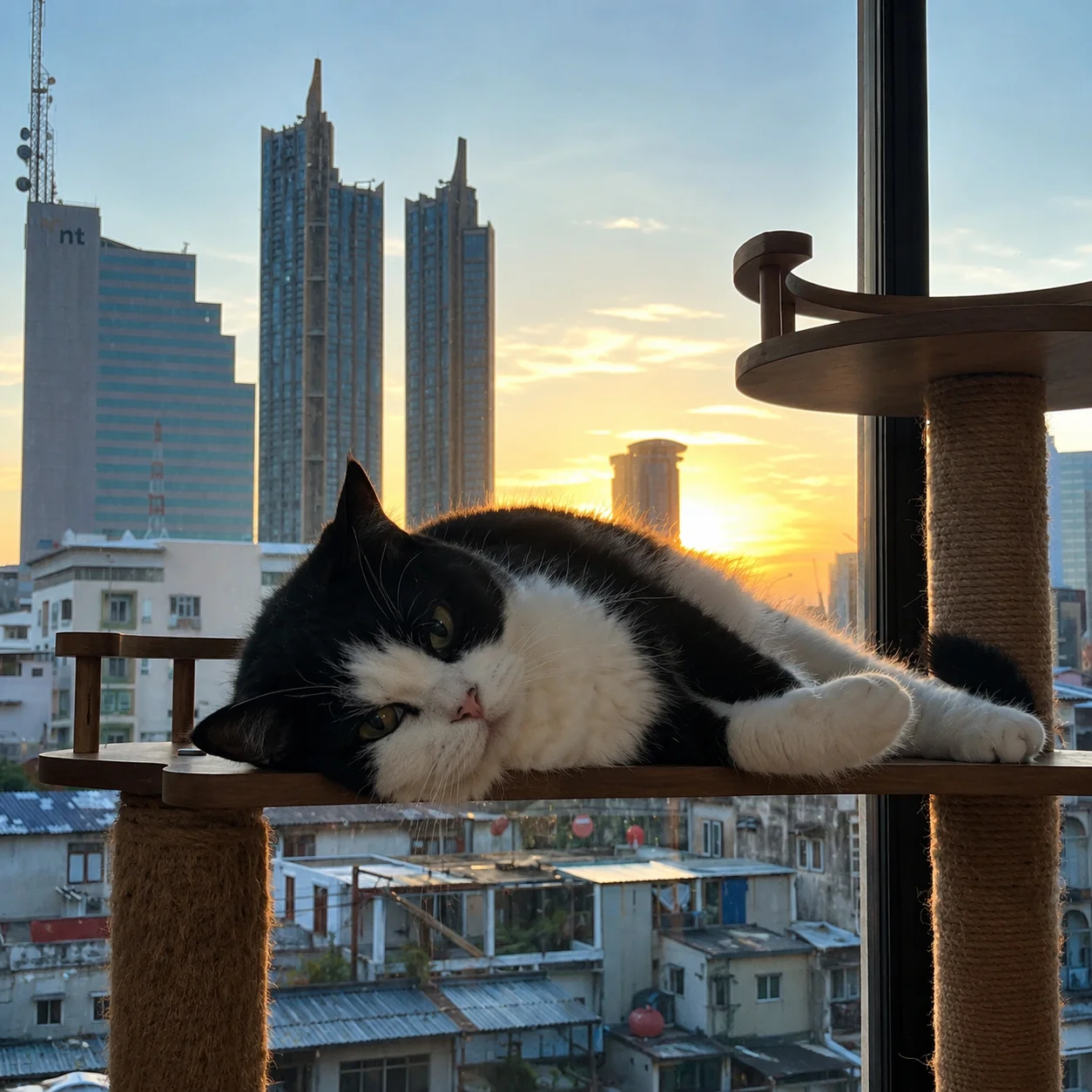
Cats are creatures of habit that often feel most comfortable in familiar territory, surrounded by familiar scents and routines. Moving to a new environment may cause some cats to feel uncertain, especially those that have rarely left home, are naturally timid, or are sensitive to noise and unfamiliar surroundings. However, cats respond differently to change. Some may begin exploring their room quickly, while others need more time to adjust.
The first step in choosing a hotel is therefore to understand your own cat. Consider whether your cat prefers a quiet environment or enjoys interacting with people. Is your cat accustomed to traveling? Does your cat have a particular feeding routine, difficulty eating in unfamiliar places, a medical condition, or medication that must be given regularly? If you have more than one cat, do they already live together comfortably?
Sharing this information with the hotel can help the team recommend a suitable room and care approach. It also allows caregivers to understand what is normal for your cat and what changes may require attention.
For cats with special health needs, consult your regular veterinarian before traveling and discuss the hotel’s ability to provide the necessary care. If your cat requires close medical monitoring, a veterinary facility with appropriate inpatient care may be more suitable than a general cat boarding hotel.

2. What Should You Look for in a Cat Hotel Room?
Your cat will spend much of its stay in its room, so the accommodation should be evaluated for safety, cleanliness, and its suitability for natural feline behavior. The size and appearance of the room are important, but they should not be the only considerations.
Private Rooms and Separating Cats from Different Households
Many cats are not comfortable being placed close to unfamiliar cats. Private accommodation and a policy of not forcing cats from different households to interact can help reduce unwanted encounters and the risk of conflict. A hotel should have clear procedures for separating cats, using shared spaces, and arranging playtime.
If you are boarding several cats from the same household, choose a room that is appropriate for their number and consider whether they already get along well. Even cats that live together may need separate arrangements if they have a history of fighting or competing for resources. Inform the hotel about these behaviors before making a reservation.

Room Features Worth Checking
Feature | Why it matters |
|---|---|
Usable space | Provides appropriate room for movement, resting, and using the litter box |
Resting areas and hiding places | Gives cats a private space when they feel uncertain |
Food and water areas | Allows feeding supplies to be positioned hygienically and conveniently |
Litter boxes | Should be suitable in number and placement for the cats staying in the room |
Air conditioning | Helps maintain a comfortable environment and prevents excessive heat |
Ventilation | Helps manage humidity and indoor air quality |
Doors and openings | Should reduce the risk of escape or cats becoming trapped in unsafe spaces |
Interior materials | Should be easy to clean and free from sharp edges or other avoidable hazards |
A room with a window may provide interesting visual stimulation for some cats, but it is not essential for every cat. A timid cat may prefer a quieter room with suitable hiding places. Choose accommodation according to your cat’s personality rather than selecting a room based only on its view or size.

3. Safety and Cleanliness: What Should You Never Overlook?
Cat boarding involves caring for multiple animals in one facility. A hotel should therefore have procedures that address escape prevention, infectious disease risks, cleaning, and emergency management.
Escape Prevention
Ask how the hotel prevents cats from escaping when room doors are opened or when cats are being moved. Are there additional doors or designated areas that help prevent escapes in important parts of the facility? Do staff follow a procedure when entering and leaving rooms?
These questions are particularly important if your cat is easily startled or tends to run toward open doors. A secure environment depends not only on the physical design of the building but also on consistent staff practices.

Health Screening Before Check-In
A cat hotel should have health requirements designed to reduce risks to other guests. These may include checking vaccination records, asking about parasite prevention, and screening for signs of illness before admission.
Owners should provide accurate information about their cat’s health, including symptoms that may initially seem minor, such as sneezing, nasal discharge, vomiting, or diarrhea. These signs may be important when assessing whether boarding is appropriate.
If your cat is currently unwell or may have a contagious condition, consult a veterinarian and postpone boarding until it is appropriate to do so. Do not conceal symptoms because you are concerned that the hotel may decline the reservation. Accurate information helps protect your cat and the other cats in the facility.
Cleaning Procedures and Equipment Management
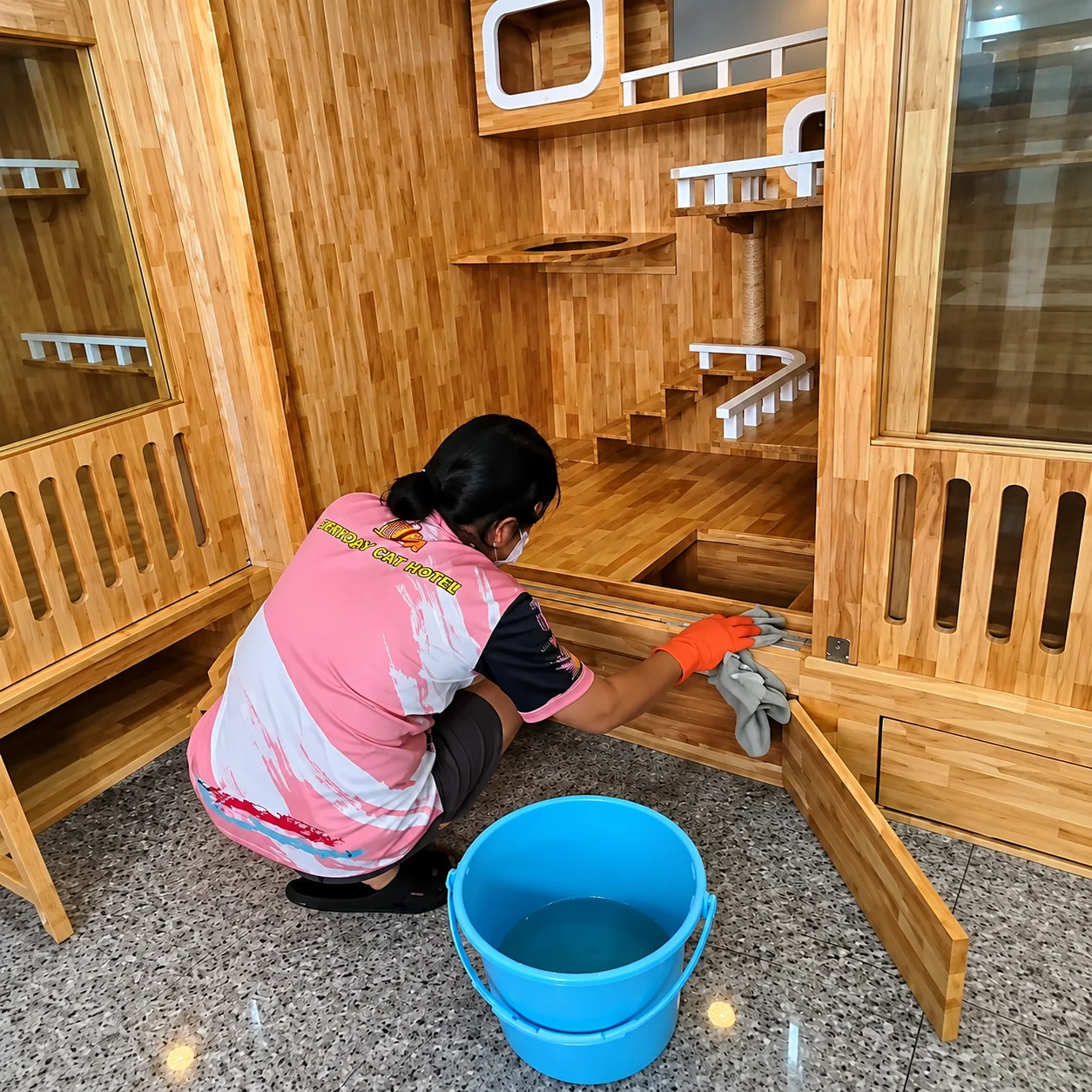
A hotel should have a consistent cleaning schedule for rooms, litter boxes, food and water bowls, and other frequently used equipment. There should also be a clear process for cleaning and preparing a room after a guest checks out.
Cleaning products should be appropriate for environments used by pets and applied according to the manufacturer’s instructions. Cats should not be exposed to cleaning chemicals or surfaces that have not yet been made safe for them to use.
It is also worth asking how the hotel stores each guest’s food and belongings, manages waste, and handles cleaning when a cat becomes ill. These procedures can help reduce the risk of cross-contamination between rooms.
4. What Makes a Good Care Team and Daily Care System?
A good cat hotel is defined not only by its rooms but also by the people who care for its guests. Caregivers who understand feline behavior and observe cats consistently can identify changes that may otherwise be easy to miss. Some cats do not show obvious signs of illness in the early stages, so changes in appetite, activity, or normal habits may be significant.
Before booking, ask when staff are present, how frequently cats are checked, and whether important information is recorded. Useful observations may include food intake, water consumption, litter box use, and changes in behavior.
Having staff on site 24 hours a day can be an advantage because it improves the facility’s ability to respond when something happens. However, the quality of the care system is just as important as the number of hours staff are present. Ask how routine checks are carried out and how information is passed between shifts.

Playtime and Behavioral Care
Cats have different activity preferences. Some enjoy chasing toys, climbing, or interacting with people, while others may prefer quiet companionship or simply observing their surroundings. Activities should be adapted to each cat’s personality and willingness to participate.
A cat should not be forced to play or accept physical contact when it is showing signs of discomfort. Caregivers should allow time for adjustment and respond to the cat’s behavior rather than following a rigid activity schedule for every guest.
Ask whether playtime in shared areas is arranged separately by household or whether unfamiliar cats are allowed to interact. For cats that are not accustomed to other cats, separate play sessions are an approach worth considering.

Communication With Owners
Photo and video updates can provide reassurance and allow owners to see how their cat is settling in. However, information about eating, litter box use, and unusual behavior is equally important.
Ask which communication channels the hotel uses, how frequently updates are provided, and how staff contact owners if an urgent issue occurs. It is also helpful to provide an alternative emergency contact in case you cannot be reached while traveling.
5. What Should Happen If Your Cat Becomes Ill During Boarding?
Before choosing a cat hotel, ask about its procedures for handling illness or emergencies. Even with careful preparation, cats may become unwell or experience an accident during their stay.
A general cat hotel is not a veterinary hospital and should not replace diagnosis or treatment by a licensed veterinarian. An appropriate response system should include observing the cat’s condition, informing the owner promptly, contacting a veterinarian when necessary, and arranging transportation if medical attention is required. Important health information and emergency contact details should be readily available.
Certain symptoms, such as difficulty breathing, seizures, loss of consciousness, or repeated attempts to urinate without producing urine, require urgent veterinary assessment. Staff should not wait for the next routine update before responding to a potentially serious emergency.
Owners should provide information about existing medical conditions, current medication, known drug allergies, their regular veterinarian, and any limitations or special care requirements. If your cat needs medication, ask whether the hotel can administer it according to veterinary instructions and how each administration is recorded.
Hotel staff should not independently diagnose medical conditions, change prescribed doses, or alter a treatment plan.
6. How Should You Compare Cat Hotel Prices in Bangkok?
Cat hotel prices in Bangkok vary according to location, room size, length of stay, amenities, and the services included in each package. The lowest daily rate does not necessarily represent the lowest total cost or the most suitable service, so it is important to compare the details before booking.
Costs to Check Before Making a Reservation
Item | Questions to ask |
|---|---|
Daily room rate | Is the price charged per room or per cat, and how are boarding days calculated? |
Weekly packages | Are discounts available, and is there a minimum stay? |
Monthly packages | What is the average daily rate, and what are the payment conditions? |
Food and litter | Are they included, or should owners provide their own? |
Multiple cats | How many cats can the room accommodate, and are there additional charges? |
Medication administration | Are there extra fees or limitations on the care provided? |
Pick-up and drop-off | Is the cost based on distance or the type of transportation? |
Emergency expenses | What is the procedure for approving and paying veterinary expenses? |
Cancellation | What are the conditions for changing dates, refunds, or deposits? |
For longer stays, ask whether a weekly or monthly package is available and whether it is more suitable for your actual travel dates. Confirm whether food, litter, and additional services are included or charged separately.
Requesting a complete price summary before confirming your reservation helps prevent misunderstandings and makes it easier to compare different boarding options fairly.

7. Should You Choose a Cat Hotel Near Home or Near Work?
Location can make dropping off and collecting your cat much more convenient. In Bangkok, traffic conditions mean that even a relatively short distance may take longer than expected. If you are searching for a “cat hotel near me,” consider the actual travel time, access to the building, parking availability, and the convenience of transporting your cat—not just the distance shown on a map.
Some owners prefer a hotel close to home, while others find it more convenient to choose one near their workplace or along their usual travel route. For example, a location accessible from Silom, Sathorn, Bang Rak, or the routes connecting to Rama III may be practical for people who regularly travel through those areas.
However, proximity should not be the only deciding factor. A slightly longer journey may be worthwhile if the accommodation and care system are better suited to your cat’s needs.
If the hotel can help arrange pick-up and drop-off, ask about the transportation method, cost, and safety procedures. Your cat should travel in a secure carrier that is appropriate for its size and properly fastened during transportation.

8. Checklist Before Booking Cat Boarding
Before confirming a reservation, review the hotel’s website, look at genuine photos or videos of the facility, read customer reviews, and contact the team with questions specific to your cat. If the hotel allows visits by appointment, this can be a useful opportunity to assess the environment, cleanliness, and suitability of the accommodation.
Confirm the hotel’s name, actual address, and travel route.
View genuine photos or videos of the room you intend to book.
Ask how many cats the room can accommodate and whether cats from different households are kept separate.
Check vaccination and health requirements before admission.
Ask about daily care routines, cleaning, and owner updates.
Confirm the procedure for illness or emergencies.
Disclose your cat’s personality, medical conditions, medication, and other important health information.
Request a complete price summary and check payment and cancellation conditions.
Prepare food, litter, documents, and personal belongings according to the hotel’s requirements.
Save the hotel’s contact information and provide an alternative emergency contact.
Preparing this information in advance helps the care team understand your cat’s needs and allows you to choose a boarding service with greater confidence. The best cat hotel is not necessarily the most luxurious or the closest—it is the one whose environment, care procedures, and capabilities are appropriate for your individual cat.